
Among the Sensex firms, HDFC Bank emerged as the biggest loser, falling 4 per cent. JSW Steel, Reliance Industries, UltraTech Cement, Maruti, Tata Steel, Wipro, Tech Mahindra, Bharti Airtel and Larsen & Toubro were the other major laggards. Power Grid, Asian Paints, Sun Pharma, Axis Bank, NTPC, ITC and Infosys were among the gainers.

Markets slipped into negative terrain in late noon deals weighed down by profit taking in bank shares.

Commemorating 75 years of India's independence, SBI has launched a 75-day Utsav Deposit Scheme, offering 6.10 per cent for fixed deposits. Senior citizens will get an additional 0.50 per cent and the offer is on until October 30, SBI said.
For the next two years the whole world, including India, is expected to reel under the effect of the current financial crisis. Here's how it will affect us in India.

Indian government bonds, particularly those of shorter maturity, strengthened sharply on Monday, as the collapse of the California-based Silicon Valley Bank (SVB) prompted investors to rush to the safety of American debt, leading to a decline in US bond yields.

The Indian rupee, which has depreciated 1.1 per cent so far in August, is expected to decline further on the back of a strengthening US dollar and a weakening Chinese yuan, according to a Business Standard poll of analysts. The Indian rupee hit an all-time low recently, closing at 83.15 per dollar. Five of the 10 respondents said the Indian currency might touch 83.5 per dollar in August itself, while others said the worst could be over.

As the results season kicks in, the quarterly earnings numbers of several blue-chip firms -- such as Infosys and Reliance Industries -- along with global trends and trading activity of foreign investors, will determine equity market movement in the holiday-shortened week ahead, according to analysts. The domestic WPI inflation data for June -- scheduled to be announced on Monday -- will also influence trading sentiments, traders said. Markets will remain closed on Wednesday for Muharram.

A day after the RBI raised the benchmark lending rate by 35 basis points, Kotak Mahindra Bank Managing Director Uday Kotak on Thursday said the central bank may go for one more rate hike to bring inflation below its upper tolerance level of 6 per cent. Yesterday, the RBI indicated that it wants inflation to be within the band first and then move towards the target of 4 per cent, Kotak said at the CII Global Economic Policy Summit 2022. "My sense is that there could be one more rate hike and that may be the time for thinking about a pivot, but we got to watch very closely the data, and maybe around 6.5 per cent as it looks today, subject to what happens to the world, subject to what happens to oil, subject to what happens to many other things," he said.

Samvat 2071: Sensex drops most in 4 years
Timothy Geithner, chosen for the post of Treasury Secretary by President-elect Barack Obama failed to pay federal taxes worth over 34,000 dollars for several years, a media report says.

Those who want to invest should consider their risk appetite. Youngsters may go for it as they have a longer horizon to recover from a setback.
Market participants said expectations of a rise in interest rates by the RBI and US Fed's comments on its stimulus programme are likely to keep the market nervous in the week ahead.
Indian stock markets are expected to be driven mostly by global factors this week amid a lack of local triggers and earnings season largely coming to an end, say analysts. Crude oil prices, rupee movement and US Federal Reserve meeting minutes to be released this week will also influence the market sentiment. "With the earnings season behind us, global cues would largely dictate the trend in the coming week," Ajit Mishra, SVP - technical research, Religare Broking Ltd, said.

The rate hike in the future is set to be 'calibrated and cautious'.

Among the Sensex firms, HDFC Bank, Bharti Airtel, Infosys, UltraTech Cement, Tata Steel, Wipro, Kotak Mahindra Bank, Reliance Industries, Tech Mahindra and JSW Steel were the major laggards. Power Grid, Titan, Mahindra & Mahindra and NTPC were among the gainers.

A combination of factors, including heavy investments in US Treasury bonds and dollar sales at a healthy profit, facilitated the Indian central bank in transferring a record surplus of Rs 2.11 trillion to the government for 2023-24 (FY24). The RBI's dollar purchases increased in FY24, supported by robust capital inflows endorsing the economy's health.

Invest with a 5 to 7 year horizon so that you are able to ride out price volatility and benefit from the long-term trends of demand and macroeconomic shifts.

Equity benchmark Sensex surged past the 57,000-mark by rallying over 1,000 points on Thursday, tracking an overall bullish trend in global equities despite the US Federal Reserve hiking rates. The 30-share BSE index closed 1,047.28 points or 1.84 per cent higher at 57,863.93. Likewise, the NSE Nifty surged 311.70 points or 1.84 per cent to end at 17,287.05.

Stock markets would take cues from the biggest event of the week -- the US Fed interest rate decision, besides tracking the trends in global markets and trading activity of foreign investors, analysts said. Last week, a heavy decline in smallcap, midcap firms, foreign fund outflows and elevated crude oil prices in the international market dented investors' sentiments. Experts said equity markets may remain volatile in the near-term amid a host of global central bank's monetary policy decisions lined up during the week.

Management commentary on demand environment, and forward guidance will be in focus when Indian IT services players declare their September quarter results for financial year 2024-25 (Q2FY25). The industry is exepected to have continued on the path of recovery in Q2, similar to the preceding quarter, rather than sprint towards growth. The top four firms likely grew between 0 per cent and 4 per cent year-on-year (Y-o-Y), according to consensus estimates.
Indian banks are facing restrictions in opening new branches in the US, Finance Minister P Chidambaram told the Rajya Sabha on Tuesday.

The Reserve Bank of India (RBI) has given its approval to two Russian banks for opening special vostro account for rupee trade. Sberbank, JSC VTB - the largest and second largest bank of Russia - are the first foreign lenders to receive this approval after the central bank announced the norms on INR trade in July. Both lenders have branch presence in India. Earlier this month, state-run UCO Bank received the RBI's approval to open a special Vostro account with Gazprombank of Russia. While the Kolkata-based lender is in the process of opening the account, the bank has received requests from various foreign lenders for opening such an account.

'Our growth in banking, financial services, and insurance (BFSI) is a prime example.'
A three-member delegation of the Indian Banks' Association met senior executives of the US Federal Reserve and New York Banking Department to explore the prospects for increased presence of Indian banks in the United States.

Equity benchmarks Sensex and Nifty on Friday spurted by nearly 2 per cent, propelled by heavy buying in IT, metal and financial stocks amid a rally in global markets after lower-than-expected US inflation data. A strong rupee against the US dollar and unabated foreign capital inflows further bolstered sentiment, traders said. Easing US inflation triggered speculation that the US Federal Reserve might slow down the pace of interest rate hikes.
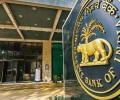
The Reserve Bank of India on Friday raised the benchmark lending rate by 50 basis points to 5.40 per cent to tame inflation.

Rupee edges higher against dollar at close.

'We expect the bull-market phase to still persist, but now led by large-caps which offer better valuation and benefit from FII inflows.'
'We expect continued pressure on midcaps, but any sharp correction looks unlikely from here on.'
Reserve Bank of India Governor Bimal Jalan said on Friday that there was no proposal to lower the short-term benchmark repo rate now.

He argued that if inflation is low, stable and moving towards the 4 per cent target, why has the RBI not revised downward the bank rate fixed in June 2023?
A 21-year old Bangladeshi man, who came to the United States aiming to 'destroy America', has pleaded guilty to attempting to carry out a terrorist attack for the Al Qaeda at the Federal Reserve Bank here using a 1,000-pound bomb.

Gold, a safe-haven bet, is likely to continue its record-smashing journey in the New Year, rising to Rs 85,000 per 10 grams and even Rs 90,000 level in domestic markets if geopolitical tensions and global economic uncertainties continue.

Among Sensex shares, Bajaj Finserv fell the most by 4.08 per cent. Bajaj Finance declined by 3.01 per cent, Tata Steel by 2.2 per cent, Wipro by 2.09 per cent, Tata Motors by 1.96 per cent, IndusInd Bank by 1.9 per cent, SBI by 1.75 per cent, Tech Mahindra by 1.66 per cent and HCL Tech by 1.2 per cent. TCS, Infosys, Power Grid, Maruti, Reliance, HDFC twins, L&T, M&M, NTPC and Ultratech Cement were also among the losers.

Automobile retail sales in India declined 9 per cent year-on-year in September amid a massive buildup of passenger vehicle inventory due to sluggish demand, dealer's body FADA said on Monday, urging original equipment manufacturers to take corrective steps. The overall registrations declined to 17,23,330 units last month from 18,99,192 units in September 2023, as most of the categories including passenger vehicles and two-wheelers witnessed a year-on-year (Y-O-Y) drop.
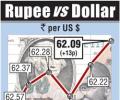
Domestic shares and other global markets rose on upbeat trade data from China earlier in the day and after a US House deal extending the federal borrowing authority.

Among Sensex stocks, Wipro gained the most by 3.29 per cent. Ultratech Cement, Reliance Industries, Hindustan Unilever, Nestle, NTPC, M&M, HDFC Bank, ITC, Kotak Bank and Axis Bank were among the winners. On the other hand, HCL Tech fell the most by 1.24 per cent. SBI, TCS, Infosys, IndusInd Bank and Tata Steel also dropped.
